|
W
Brownfield & Son |
    |
Location and period of operation:
|
W
Brownfield & Son |
Burslem |
1850 |
1891 |
|
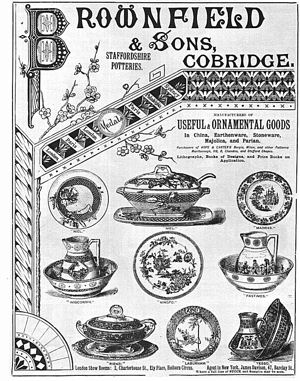
Brownfield were manufacturers of
earthenware and porcelain
(porcelain introduced in 1871) at Cobridge,
Stoke-on-Trent
|
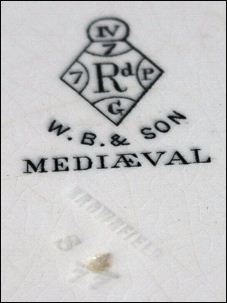
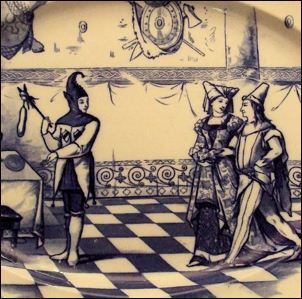
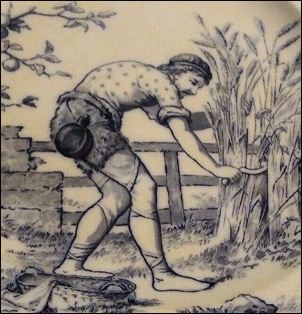
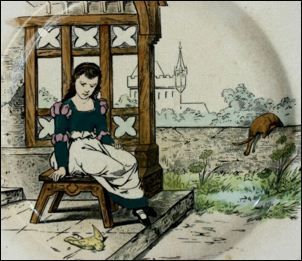
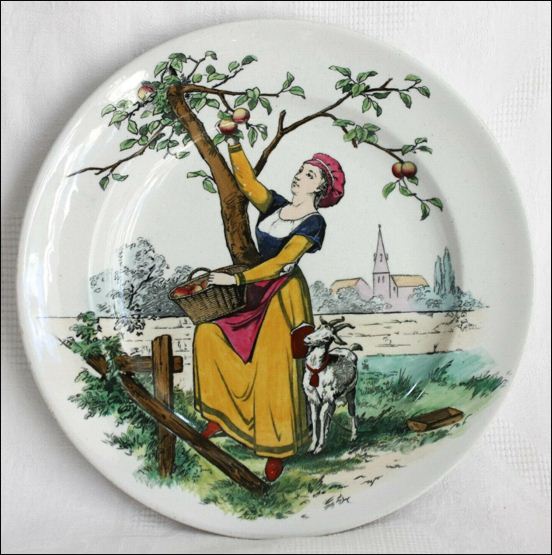 hand coloured transferware plate in one of the Mediaeval pattern series
the registration
diamond shows that the pattern was first registered the impressed mark on the left has 4/77
which indicates that |
|
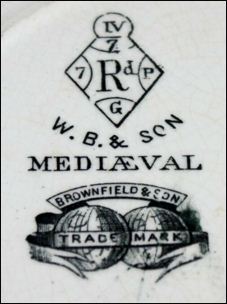
Initials and marks used on ware for identification:
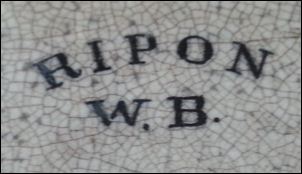
'RIPON' is the pattern name
WB
W B & S
often including the name of
the pattern.
sometimes
including an impressed mark of
the Staffordshire knot enclosing the
initials WB

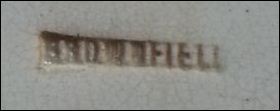
The name BROWNFIELD was also used impressed into the body
from 1871 some marks had "& Son"
from 1876 some marks had "& Sons"
Links for Brownfield:
More connections with William Brownfield
|
|
|
|
Biography of William Brownfield:
|
BROWNFlELD, William (1812-73), pottery manufacturer, Hanley. William Brownfield was born in Hanley in 1812. He was the son of Ralph Brownfield who was an earthenware manufacturer and Sarah nee Meigh. After working as a commercial traveller for his father's firm - in 1836 William joined the pottery company of Robinson and Wood, using a works on Waterloo Road, Cobridge [in between Douglas Street and Arthur Street (renamed Crane Street).
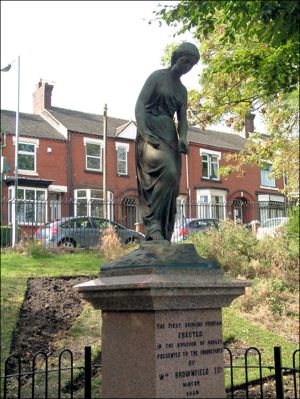
He was also a member of Bethesda Methodist New Connexion church. He served as a market trustee and commissioner for Hanley and was chief bailiff in 1844. He favoured Hanley's incorporation as a borough and 1858 became Hanley's mayor in succession to John Ridgway. He was a borough and county magistrate and later a deputy lieutenant. He was a director of the Staffordshire Potteries Waterworks Company and of the North Staffordshire Railway. He gave £500 towards the building of a working men's reading room in the Mechanic Institute in 1859 and in the same year presented the drinking fountain in Fountain Square to the town. William Brown lived in Market (now Huntbach) Street, Hanley, until his marriage to Elle Etches, daughter of a Derby cheese factor, on 14 January 1847. The family lived subsequently at Chatterley House, Old Hall Street, Hanley, where their seven children were born. They moved to Barlaston Hall, Barlaston, about 1869. WB died there on 1 July 1873. A red marble obelisk in Hanley cemetery commemorates him. Sources: Daily Sentinel 17 July '1873; R. and E. Hampson, 'Brownfield, Victorian Potters', in Northern Ceramic Society Journal, 4, (1980-1); Jewitt. People of the Potteries. |
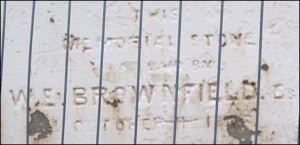
Memorial stone laid by W. E.
Brownfield
at the Portland Street Methodist Church
in 1876
Links for Brownfield:
questions/comments/contributions? email: Steve Birks