|
William Smith & Co |
    |
Location and period of operation:
|
William
Smith |
Stockton-on-Tees |
c.1825 |
1855 |
|
NOTE: This potter was not based in Stoke-on-Trent (Staffordshire) but in Stockton-on-Tees, Yorkshire.
|
[ see "Confused by Wedgwood?" ]
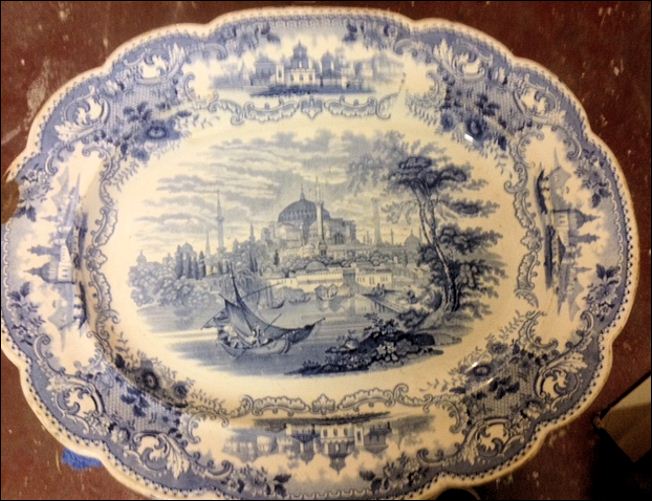 'Select Views' platter made by William Smith & Co., Stockton-on-Tees, Yorkshire |
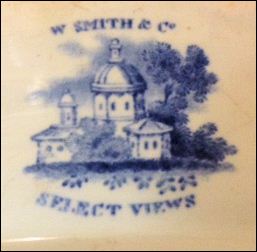 W Smith & Co Select Views
photos courtesy: Peter Hanlon |
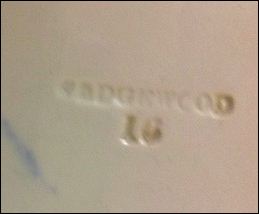
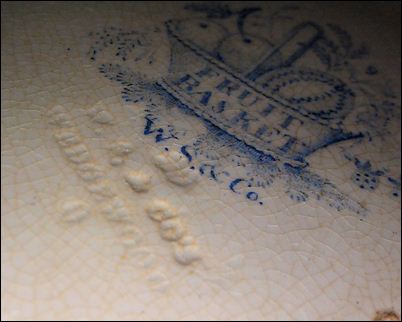
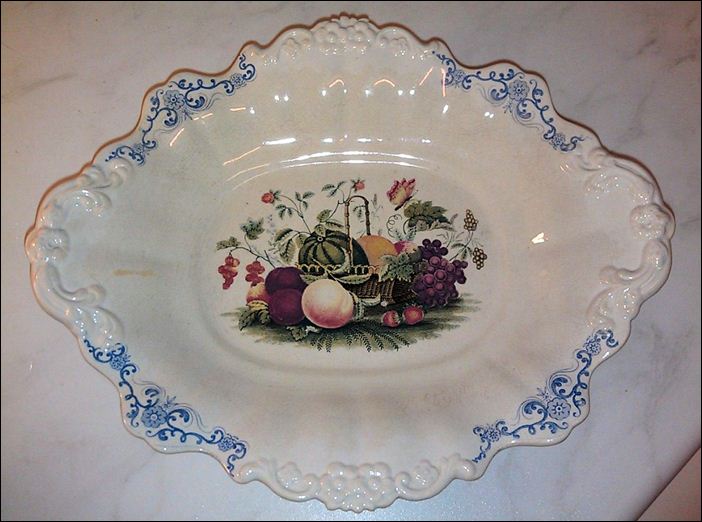 'Fruit Basket' serving plate made by William Smith & Co. |
impressed mark: note the
use of WEDGEWOOD photos courtesy: Bonnie Kaspers |
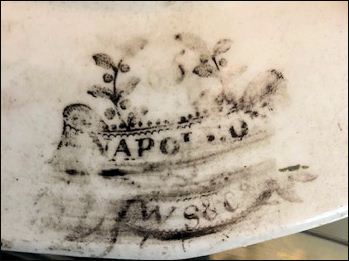
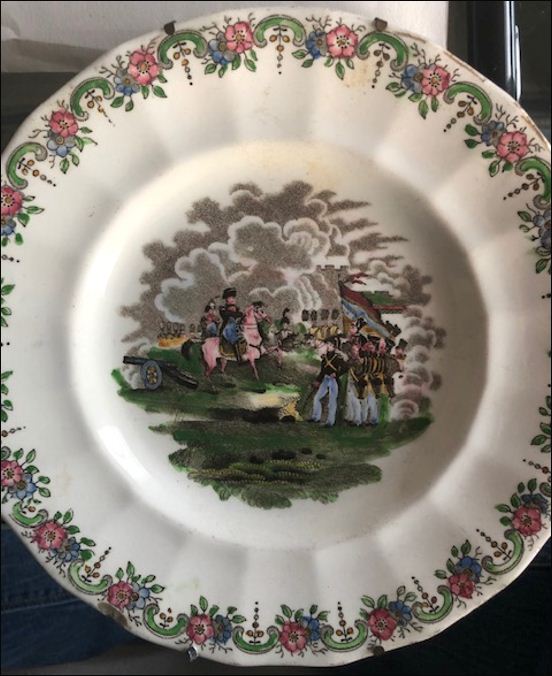 plate with scene of Napoleon |
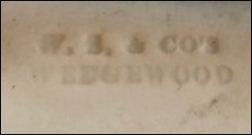 W.S. & Co's Wedgewood
photos courtesy: Ron Neumunz |
Names and initials used on ware for identification:
W. S. & CO
STAFFORD
POTTERY
W. S. & CO's
WEDGWOOD
W. S. & CO's
WEDGEWOOD
W. S. & CO's
QUEEN'S WARE
STOCKTON
W. S. & CO
WEDGEWOOD WARE
W Smith & Co
VEDGEWOOD
VEDGWOOD*
* The following comment appears in Godden's encyclopedia of marks concerning this mark -
"This impressed mark occurs on an English earthenware plate in the Godden Collection... it was probably made at one of the many Yorkshire potteries, the mark being intended to look like that of Wedgwood but different enough to escape legal action."
Godden continues..... "Since writing the above note... I have discovered two plates with this mark in the Victoria and Albert Museum. One of these is similar, both in style of decoration and in form, to a plate in my own collection which bears the impressed mark
W S & CO'S
WEDGEWOODThis mark was used by William Smith & Co. of the Stafford Pottery, Stockton-on-Tees, Yorkshire, and it would therefore seem that this VEDGWOOD mark was used by this firm, who sought to pass off their wares as true Wedgwood. In this case they were successful, for the two plates in the Victoria and Albert Museum were officially described as made by the Staffordshire firm!"
The following is an extract from the 1865 book "The life of Josiah Wedgwood" by L. Jewitt:-
Injunction against Messrs. Smith and Co.
"And now, while speaking of marks, a few words may opportunely be introduced on a matter which is somewhat puzzling to collectors, and about which they will doubtless be glad to receive enlightenment. It is this: in many collections pieces of one kind or other will be found bearing the mark WEDGWOOD & Co., and others with the mark of WEDGEWOOD, sometimes impressed, and sometimes in colour.
The latter, it will be observed, has a central E, which the real name of Wedgwood does not possess. These I have heard variously appropriated by collectors to Wedgwood and Bentley, to Wedgwood and Byerley, and to a dozen other supposed periods and people.
I am enabled to state that these pieces, many of them highly creditable and excellent productions, were not made by the Etruria Wedgwoods at all, but that the latter (the "Wedgewood," and sometimes the "Wedg-wood ") were the manufacture of Messrs. William Smith, and others, of Stockton, against whom Messrs. Wedgwood applied for and obtained an injunction restraining them from using the name of "Wedgwood, or " Wedgewood."
The following official notification will well explain this matter, and prove of considerable interest to collectors: –
"Vice-Chancellor of England's Court,
"Lincoln's Inn, 8th August, 1848.
IN CHANCERY.
"Wedgwood and others against Smith and others."Mr. BETHELL on behalf of the Plaintiffs, Francis Wedgwood and Robert Brown (who carry on the business of Potters, at Etruria, in the Staffordshire Potteries, under the Firm of 'Josiah Wedgwood
and Sons'), moved for an Injunction against the defendants, William Smith, John Walley, George Skinner, and Henry Cowap (who also carry on the business of Potters, at Stockton, in the County of
Durham, under the Firm of 'William Smith and Company'), to restrain them and every of them, their Agents, Workmen, or Servants, from stamping, or engraving, or marking, or in any way putting or placing on the ware manufactured by them, the Defendants, the name ' Wedgwood ' or ' Wedgewood,' and, from in any manner imitating or counterfeiting such name on the Ware manufactured by the Defendants since the month of December, 1846, or hereafter to be manufactured by the Defendants, with the name 'Wedgwood' or 'Wedgewood' stamped, engraved, or otherwise marked or placed thereon.Mr. Bethell stated that the trade mark 'Wedgwood.' had been used by the family of the Wedgwoods for centuries; he would not, however, go further into the matter at present, because Mr. Parker appeared for the Defendants; and it might become necessary – with whom, and himself, it had been arranged by consent on Mr. Parker's application on behalf of the Defendants, for time to answer the Plaintiffs' Affidavits – that the Motion should stand over until the Second Seal in Michaelmas Term next; and that in the meantime the Defendants should be restrained as above stated.; except that for the words, 'since the month of December, 1846,' the words, 'since the month of July, 1847,' should be substituted.
Mr. J. Parker said he appeared for the Defendants, and consented without prejudice; and on his application for time to answer the Plaintiffs' Affidavits, the Court made an order accordingly.
"On the 9th day of November, being the Second Seal in Michaelmas term, 1848, Mr. E. Younge, as counsel for the above-named Plaintiffs, moved for, and obtained, a perpetual Injunction against the Defendants in the terms of Mr. Bethell's Motion, substituting for the words, ' since the month of December, 1846,' the words, 'since the month of July, 1847," the Defendants consenting to pay to the Plaintiffs their costs.
"Solicitor for the Plaintiffs,
SAMUEL KING
Furnival's Inn, Middlesex."
Questions, comments, contributions? email: Steve Birks