Public Monuments and Sculpture in Stoke-on-Trent & Newcastle-under-Lyme

Public Monuments and Sculpture in
Stoke-on-Trent & Newcastle-under-Lyme
| Index
of all Stoke-on-Trent art |
Index
of all Stoke-on-Trent art |
Monument to John Wedgwood
at Bignall Hill
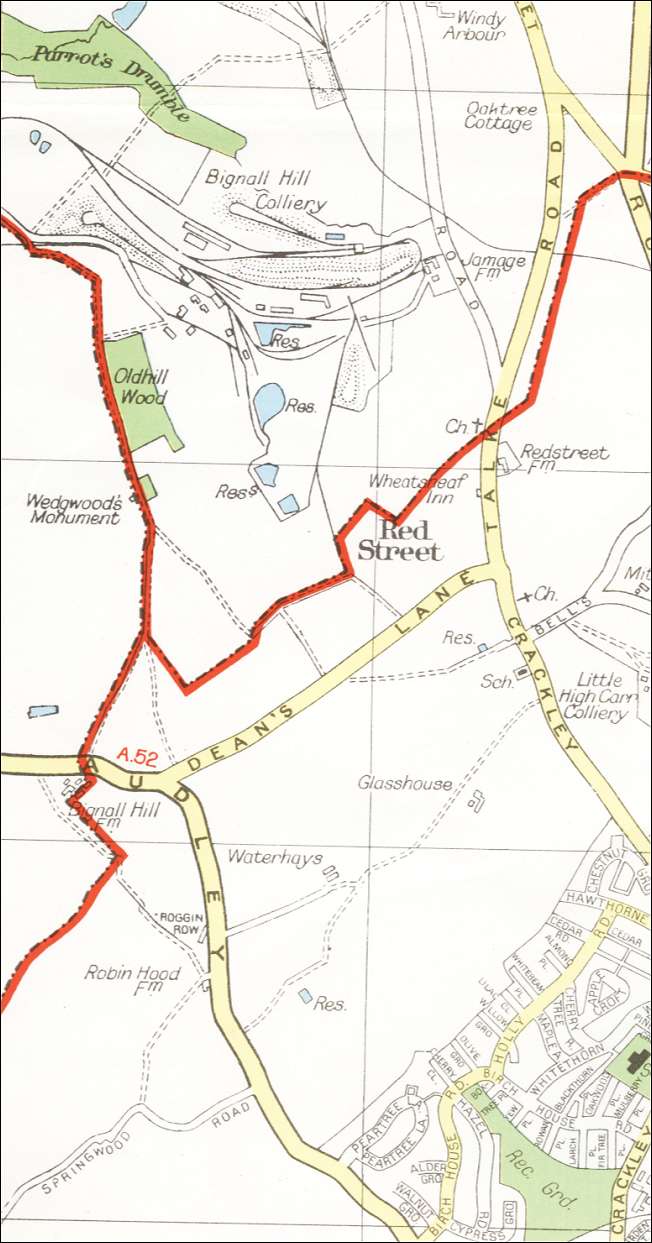
Location: Obelisk - Memorial to John Wedgwood, public footpath from B5500 - on hill to north east of Bignall Hill
Installed: date of design: 1837-45; unveiled: 1845
Commissioned by: Executors of John Wedgwood's will
Architect: Thomas Stanley
John Wedgewood died on 6th Feb 1839 and declared in his will: "I desire my body to be interred within my estate at Bignall End in a vaulted tombe at the summit of a certain field called Old Hill…..and my excetors do cause an obelisk or monument to be erected."
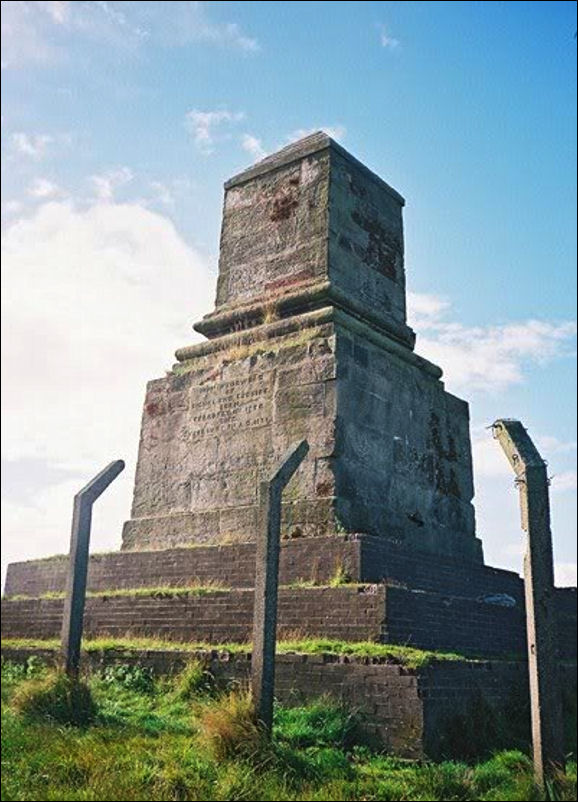
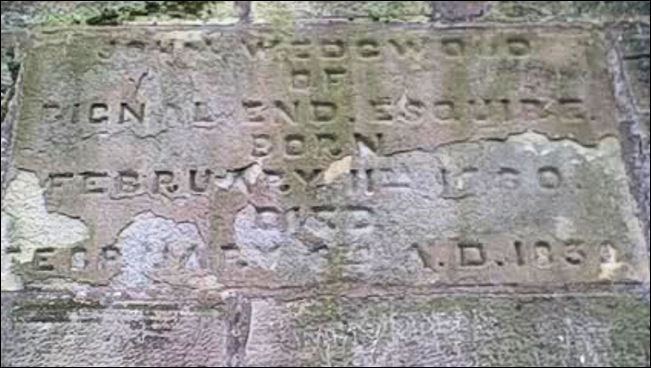
The monument is still very prominent even though it was blown down in 1979 and is only a quarter of its height. The inscription reads "John Wedgewood of Bignall End, Esquire. Borne Feb 1760 Died Feb 1839"
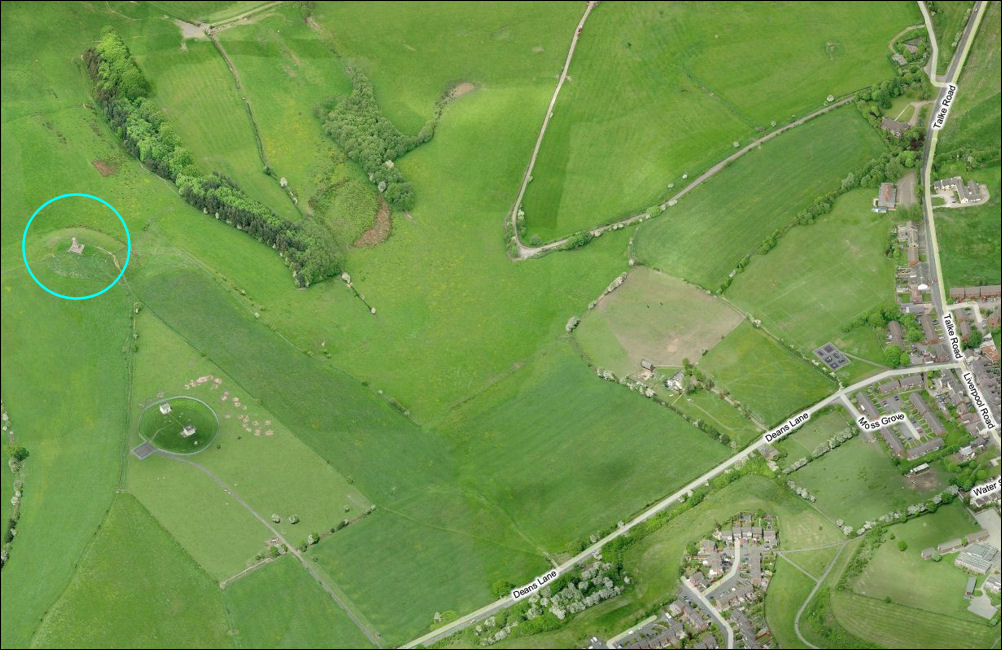
The location of the
Wedgwood Monument at Bignall Hill
Bing Maps
c. 1955 map of Red Street, showing the location of the Wedgwood Memorial
Bignall Hill, Staffordshire is a prominent local landmark, and forms part of an escarpment ridge four miles north-west of Newcastle-under-Lyme.
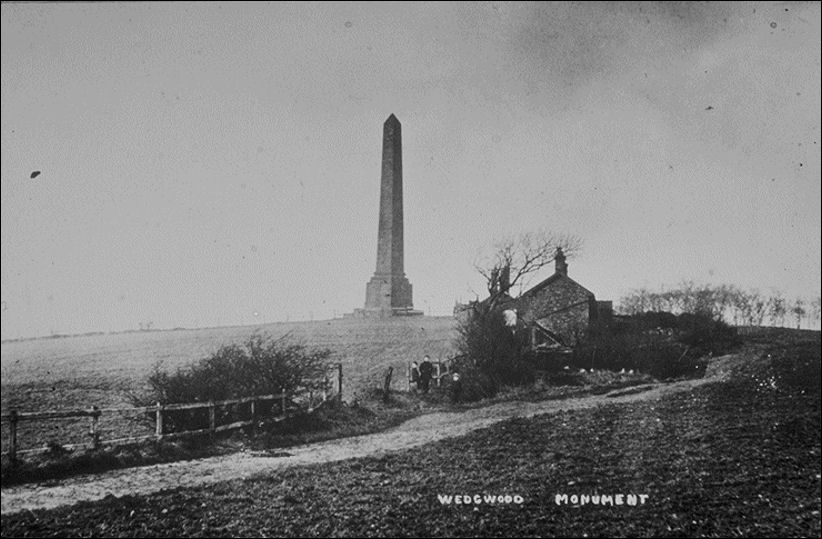
There is a large stone monument on the summit, to John Wedgwood (1760-1839) a former local employer and coal mine owner. Wedgwood's monument was initially an immense obelisk erected in 1845.
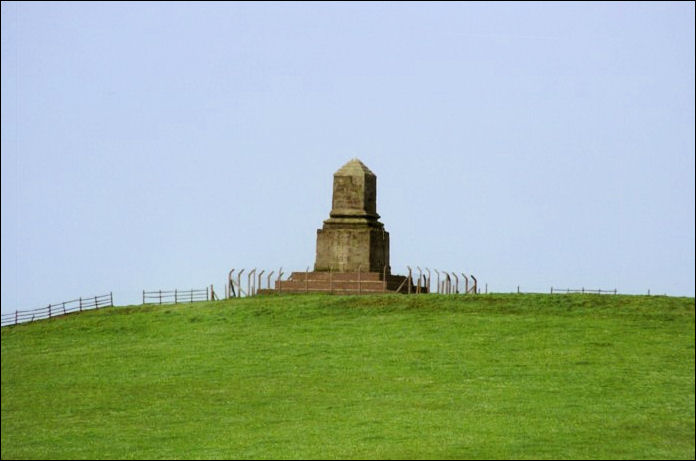
Following storm damage in 1976 it was reduced to a quarter of its original size, although the base is still substantial. The monument is today reachable by footpaths and is the highest point in the area. It affords sweeping 360-degree views: south to Cannock Chase and the city of Stoke-on-Trent; north across the Cheshire Plains to Jodrell Bank radio telescope; east to Mow Cop Castle and the Peak District; and west to the mountains of North Wales and Snowdonia.
Below the hill are the remains of the Wedgwood-owned colliery - now a Nature Reserve and Historic Site of Biological Interest Grade 2 - where there were notable coal mining disasters in 1836, 1874 1895 and 1911 and 1912.
Postcard of Wedgwood Monument
The memorial to John Wedgwood (1760 - 1839) at Bignall End stands on the top of Bignall Hill
The Wedgwood Monument after a gale in 1976 which destroyed the majority of the obeliskphoto: Clive Millington @ Acumenbooks
photo: 2008 by BereniceUK @ Midlands Heritage
|
Inscription: (panel on east side)
'JOHN
WEDGWOOD/ OF/ BIGNALL END. ESQUIRE
|
Materials:
|
Part of work |
Material |
Dimensions |
|---|---|---|
|
Monument |
Ashlar stone, rusticated | 11.4m square x 12m high |