| Index
of Churches and Chapels |
| Index of Fenton Churches |
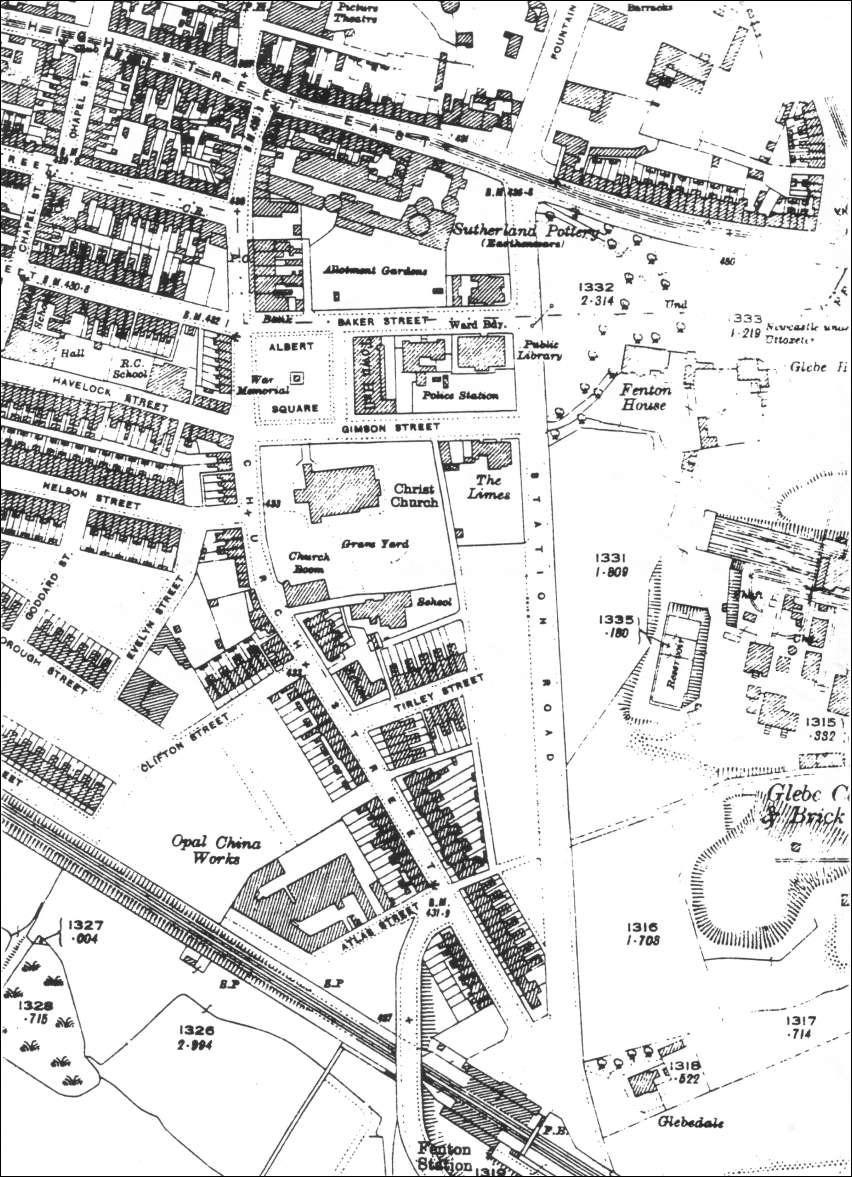
The 1878 ordnance Survey map shows the original Anglican church built in Church Street to the design of Henry Ward and consecrated in 1839.
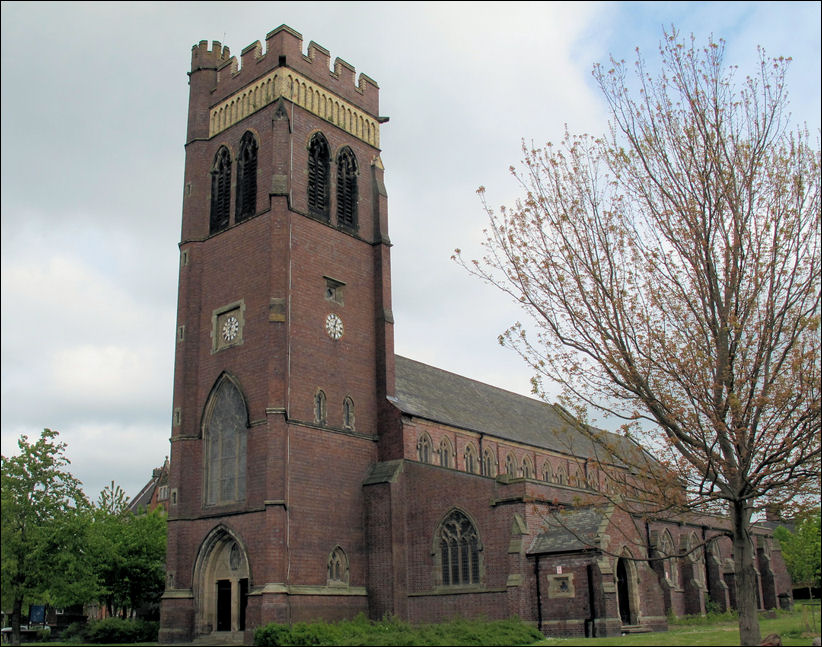
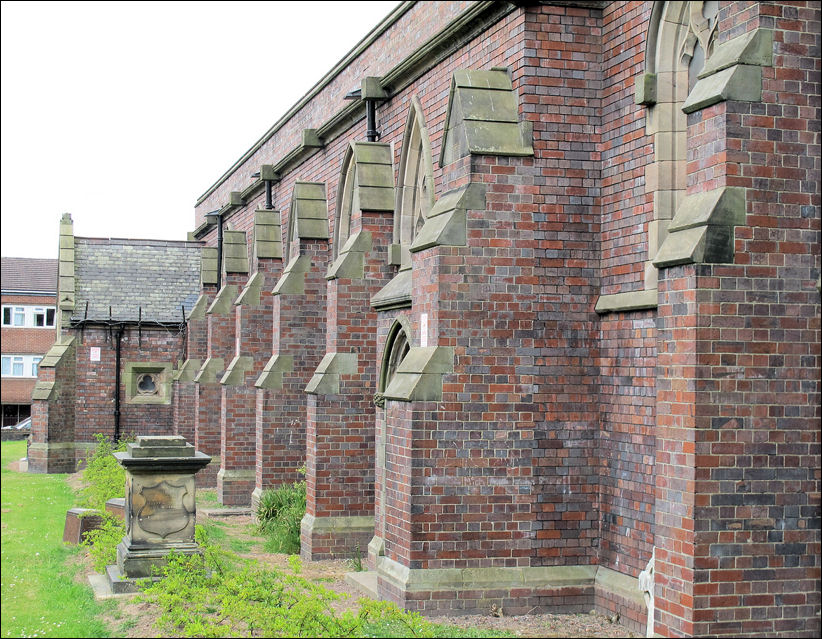
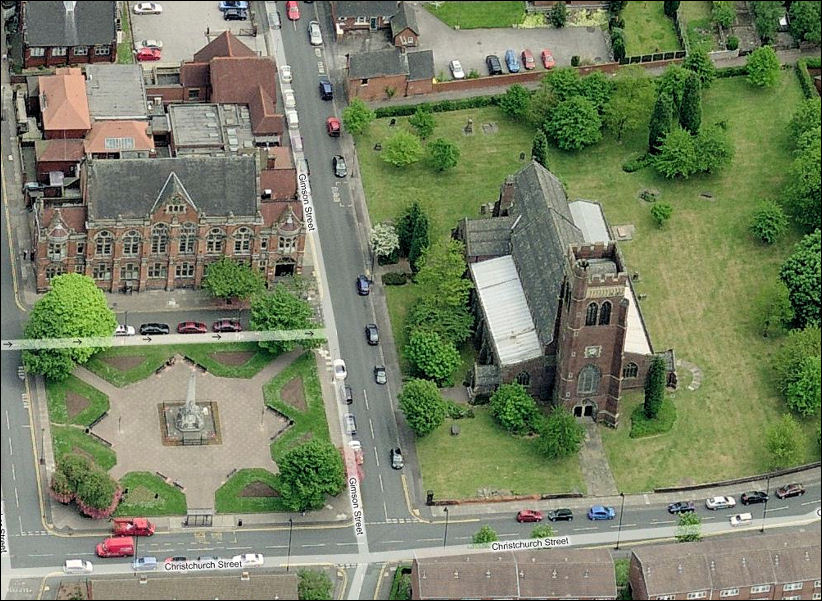
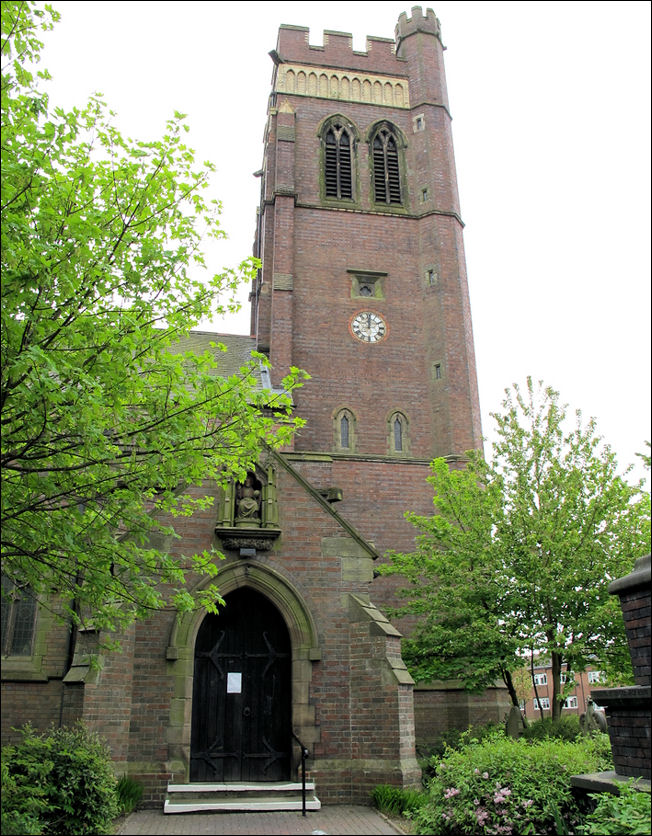
The 1924 ordnance Survey map shows the current church - built in 1890, to seat 1,900 people. It was designed by Charles Lynam
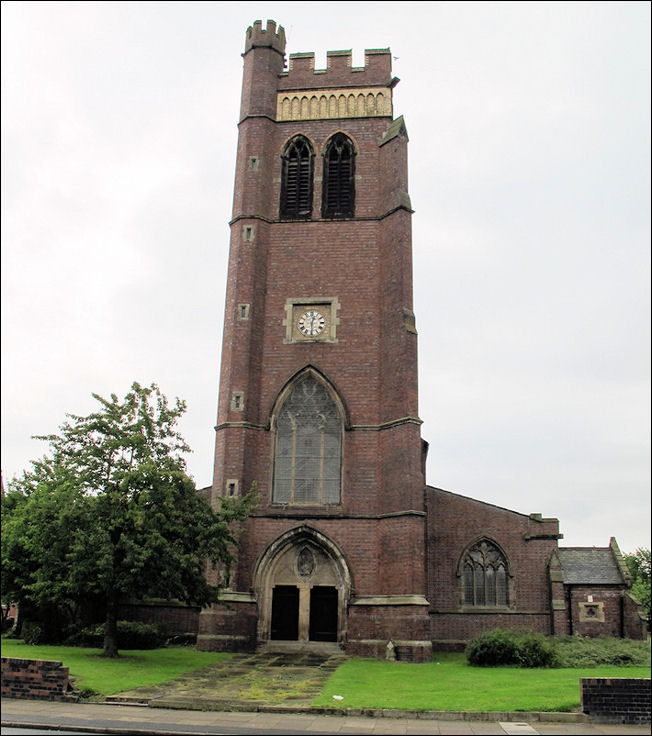
A 1907 directory records: 'Fenton Parish Church (Christ Church), Vicar: Rev. the Hon L. F. Tyrwhitt.
|
|
The first Christchurch:
Ralph Bourne, in his will (d.1835), left the sum of £2,500 for the building of an Anglican church for Fenton with a sum of £1,000 for its endowment.The gift and the church were described by John Ward, in his book, The Borough of Stoke-upon-Trent (1843):
“Fenton-Culvert has now the benefit of a church, advantageously placed, for accommodating the population of that and the sister hamlet, near the main thoroughfare, and on the branch road leading from Blurton to Trentham.
It has been reared and endowed almost wholly by the bounty of one individual, the late Ralph Bourne, Esq., who died in November, 1835, and, by his will, placed the sum of £2,500 in the hands of Trustees (Lord Viscount Sandon, and the Rev R Bourne Baker,) for the erection of a church, and £1,000 for its endowment.He also gave to his nephew, John Baker, two acres of land, upon an implied trust, for the site and cemetery. The remaining cost of the erection, which exceeded £3,000, was defrayed by Mrs Baker, widow of the late Mr William Baker, and sister of Mr Bourne.
The church is of brick, with gothic doors and windows, cased with stone. The tower is of good proportions, crowned with battlements and pinnacles of stone. The interior is 66 feet in length, by 44 in width. The windows, five on each side, are divided into two compartments each, by stone mullions. The eastern window has four compartments, bordered with stained glass, filled with figures of the four Evangelists, and scriptural sentences. The arched head contains the sacred monogram, in a glory, and enrichments of brilliant colours. There are galleries, supported by iron pillars, and the church contains upwards of 700 private and about 300 free sittings. It is furnished with a suitable organ, which, as well as the east window, was presented by Mr Bourne’s family connexions. The church has been very lately made the head of a district chapelry, embracing the principal portions of such of the two townships of Fenton, as were not annexed to the District Parish of Longton.”
The first incumbent was the Rev William Sollis, who lived in a parsonage provided for him in Church Street (now Christchurch Street).The Rev William Sollis completed the form sent to each parish for the census of places of religious worship in 1851 where he stated that the income was £172 per annum, most of which (£l00) came from the pew rents. There were 700 rented seats and 350 free seats.
He estimated the attendance at Divine Service on Sunday, 30 March 1851 as:
MORNING AFTERNOON General Congregation 260 450 Sunday Scholars 360 380 TOTAL:
620 830
He also reported that there was a second Sunday School containing about 100 children held in a licensed building where a Sunday evening service was also held which was usually attended by about 150 people. The Sunday school was held in a building erected below the church on land provided by the Baker family:“A school-house near the church has been also erected, by the voluntary contributions of the families of Bourne and Baker, and other friends of the Establishment, at an expense exceeding £500, towards which the Newcastle and Pottery Branch of the Diocesan School Society, gave a donation of £50. Upwards of 400 children of both sexes are taught here on Sundays, and between 40 and 50 boys, and about 70 girls, are instructed in the week-days." (Ward)
The 1878 ordnance Survey map shows the original Anglican church built in Church Street to the design of Henry Ward and consecrated in 1839.The church was demolished and replaced by a larger structure in 1890.
The school buildings shown on the map were also demolished after the Second World War and the site is now occupied by the houses in Cholerton Close. “Church Terrace”, a row of six houses built in brick ornamented with stone, was constructed by William Baker partly to accommodate the school teachers and parish sexton.
notes: Andrew Dobraszczyc
questions/comments/contributions? email: Steve Birks
updated: 31/01/2003