| the local history of Stoke-on-Trent, England | |

Focus on - Brick making in Stoke-on-Trent
 |
Early brickmaking and the Geology of North Staffordshire (this page) |
|
|
Growth of brickmaking and photos of kilns and works |
|
|
Brickmaking in Stoke-on-Trent |
|
|
Brick manufacturers and brickworks jobs from the 1881 census |
|
|
Maps of marl holes in Stoke-on-Trent |
next: Growth of brickmaking and photos of kilns and works
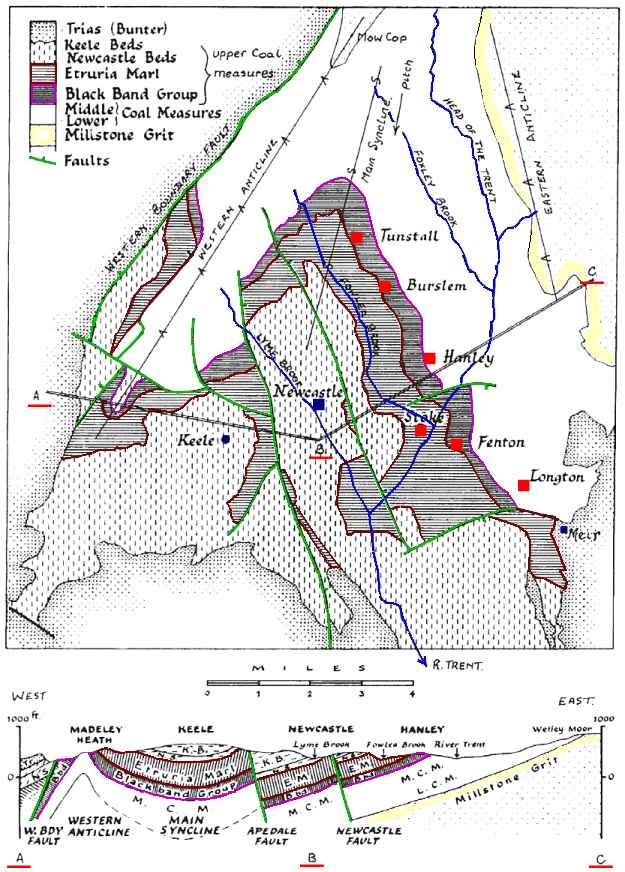
Stoke-on-Trent is well supplied with beds of heavy clay suitable for making bricks. These included Etruria marl and Old Mill marl, together with that associated with the coal seams:- Black Band , and the Middle and Lower Coal measures.
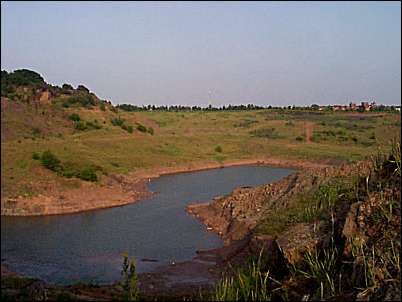
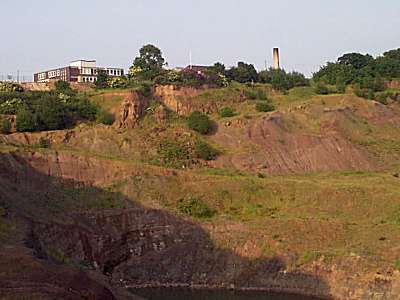
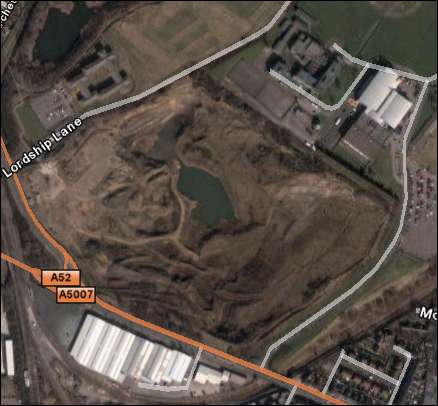
The location of brickyards (and tileries) has been dictated by the presence of clay beds, and as these became exhausted or the clay pits too deep for economic working, new works were established on fresh clay sites. Derelict sites, represented by large holes (often filled with water) were a prominent feature in the North Staffordshire brick making districts.
Early brick making Indications of Roman brick making is indicated by the presence of quantities of bricks on a site at Holditch (between Newcastle-under-Lyme and Chesterton) which was occupied from the late 1st to 3rd century AD. However Roman brick making was not extensive. According to Plot a brick making clay was being extracted near Stoke-on-Trent in the later 17th century. He reported that 'on a bank by the way betwixt Newcastle and Keele' Plot met with a peculiar sort of brick-earth which became blue when heated. This was Etruria marl, which subsequently yielded enormous quantities of brickmaking material in the Potteries and also in the Black Country.
The Geology of North Staffordshire
|
28 Dec 2005