|
|
Inns, Public Houses |
|
|
|
|
|
Inns, Public Houses |
|
|
also see: Schools
| Churches and Chapels | S-o-T
Districts
| Index of all Stoke-on-Trent Streets |
List of Inns and Pubs in and around Stoke-on-Trent
also see "New uses for Old Pubs"
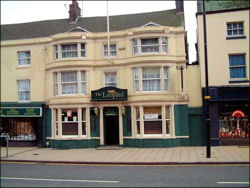
"On Friday last I dined with Mr. Brindley, the Duke of Bridgewater's engineer, after which we had a meeting at the Leopard on the subject of a Navigation from Hull.... to Burslem"
– Josiah Wedgwood, 11th March 1765.
Importance of the Inns:
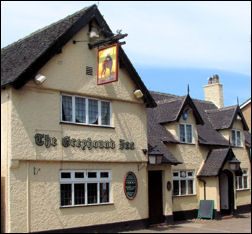
The Greyhound Inn, Penkhull
Inns, hotels and taverns have played an unusually important part in the industrial, commercial and administrative affairs of the Potteries. Penkhull's sixteenth century Greyhound hosted for many years the Court of the Manor of Newcastle-under-Lyme, while Burslem's Leopard held in 1765 the first meeting between Josiah Wedgwood and others which culminated in the cutting of the Trent and Mersey Canal. Some local hostelries have strange tales to tell; the Staff of Life at Stoke-upon-Trent and the Springfield Hotel at Trent Vale..... Potteries' pubs come in many guises, large and small, old and new.
The Leopard, Burslem
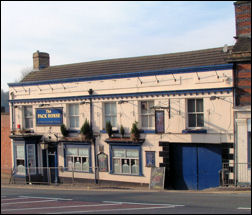
The Pack Horse, Longport
While most grew out of the communities they serve, a few were built when their surroundings were different from what they are today. The Pack Horse's origins go back to the time when Longbridge was a scattered hamlet in the Fowlea Valley between Burslem and Newcastle-under-Lyme.
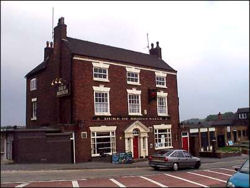
The Duke of Bridgewater on the opposite side of Newcastle Street, was raised alongside the Trent and Mersey when the former hamlet, its name changed to Longport, was expanding rapidly in response to greatly increased commercial and industrial activity generated by the Canal.
Duke of Bridgewater, Longport
The Six Towns are not short of public houses. The centre of Burslem alone has its American, Bowler Hat, Duke William, Foaming Quart, Huntsman, Leighton's, Leopard, Lloyds Tavern, Marquis of Granby, Mitre, New Inn, Red Lion, Roebuck, Stag, Swan, Vine and Ye Olde Crown, not forgetting the George Hotel.
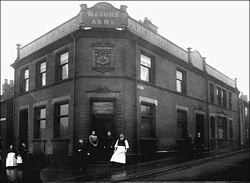
Masons Arms, Hanley
The names of many Potteries' pubs have local significance. Tunstall's Windmill Inn reflects the town's rural origins, while Hanley's Smithfield harkens back to the cattle market which used to be held nearby. We find Masons Arms, Coachmakers Arms, Miners Arms, Signalman, Jolly Potter and Farmers Arms reminding us of local industries, past and present.
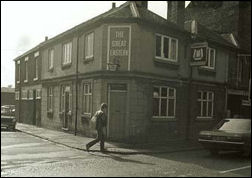
Former landowners are remembered in the Sneyd Arms, Foley Arms and Sutherland Arms. But what of Burslem's Great Eastern, Tunstall's Ancient Briton, and Hanley's French Horn?
Great Eastern, Dale Hall
Few are the pubs in the City where a warm welcome is not assured. Potteries' folk, renowned for their friendliness at any time, are unsurpassed when relaxing together over a pint or two of best draught mild or bitter.Text based on: "Six of the Best" - Richard Weir
questions/comments/contributions? email: Steve Birks