|
|
| Stoke-on-Trent Districts: Foley |
Pottery Works in the Foley Area


Next: Public Houses at The Foley
Previous: Census records for The Foley
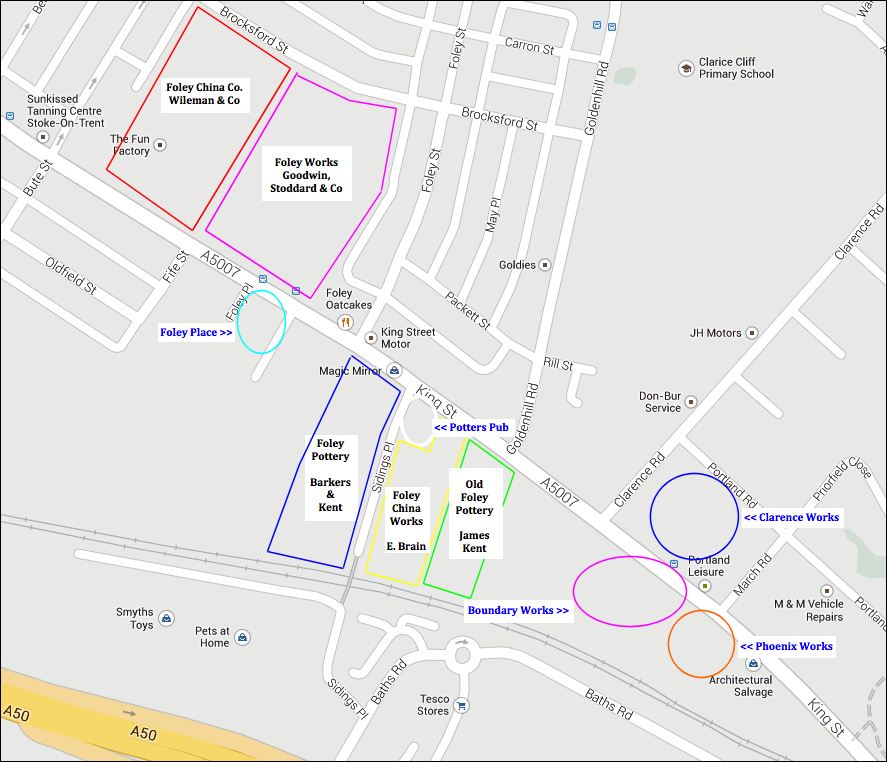
The pottery works of the
Foley district of Fenton
Google Maps
|
Pottery Works in the Foley Area There were five 'Foley' pottery works:-
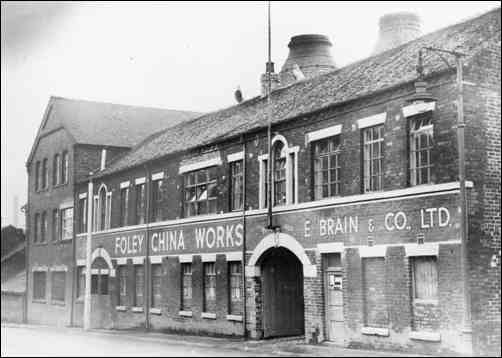
The Foley China Works of E Brain & Co
In the year 1885 they were purchased by E. Brain.
The Foley Works
Demolished
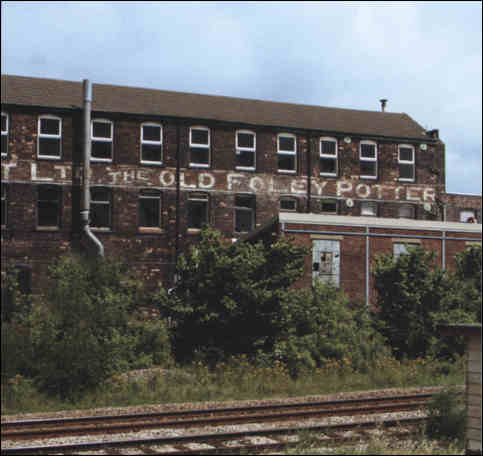
in 1983 The Old Foley Pottery of James Kent Ltd
James Kent: "This firm of general domestic potters, Old Foley, Longton, Was founded by James Aloysius Kent (born 1864 died 1953) with five workmen from the firm of Barker & Kent (including Arnold Bennett's brother Septimus Bennett, modeller) in 1897." Demolished
in 2006 Pottery works between The Foley and Longton:-
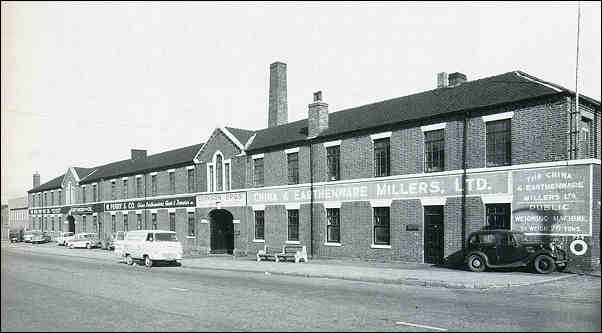
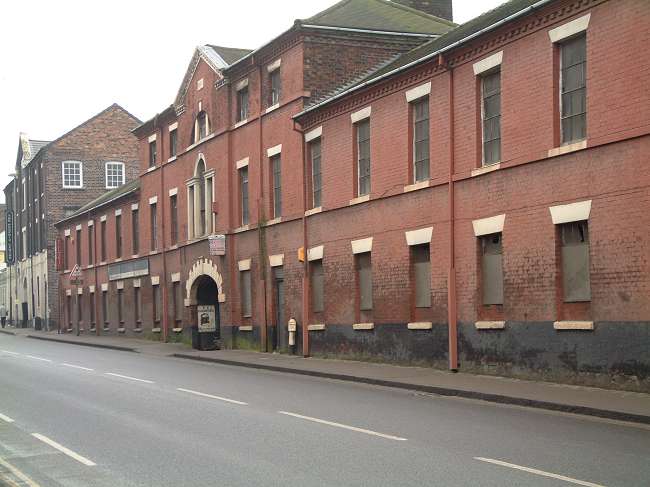
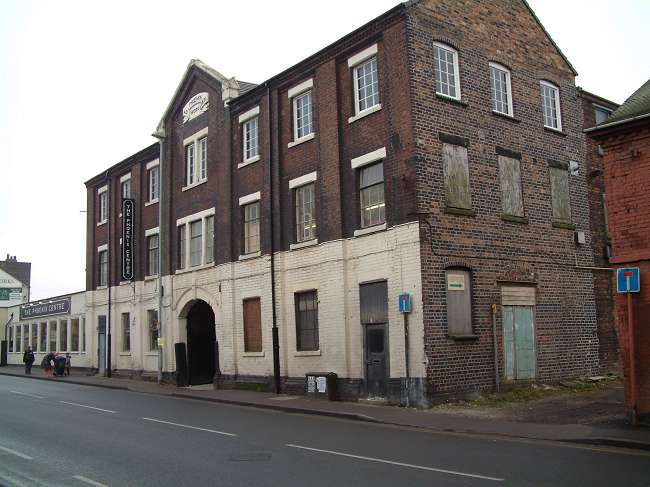
The Boundary Works The Boundary or California Works - "Pottery works. Dated 1819, with later additions and modifications. Brick with plain tiled roofs. Entrance range of 3 storeys, 5 bays with central projecting bay with segmentally arched way to rear with Palladian style window over, and Diocletian window above. Pediment with heavy modillion cornice and date stone." On the other side of King Street, opposite the Boundary Works was the Clarence Works.
The Phoenix Works Built 1879 by Thomas
Forester
|
Next: Public Houses at The Foley
Previous: Census records for The Foley
questions / comments / contributions? email: Steve Birks