|
 From 1850, rapid strides were made in the improvement of the ware, and under W.
Brownfield & Sons they became equal to any others produced. In earthenware,
they made white, printed, enamelled and gilt ware, from the simplest to the more
elaborate and costly patterns, in table, toilet, and dessert services and all
the usual articles for household use.
From 1850, rapid strides were made in the improvement of the ware, and under W.
Brownfield & Sons they became equal to any others produced. In earthenware,
they made white, printed, enamelled and gilt ware, from the simplest to the more
elaborate and costly patterns, in table, toilet, and dessert services and all
the usual articles for household use.
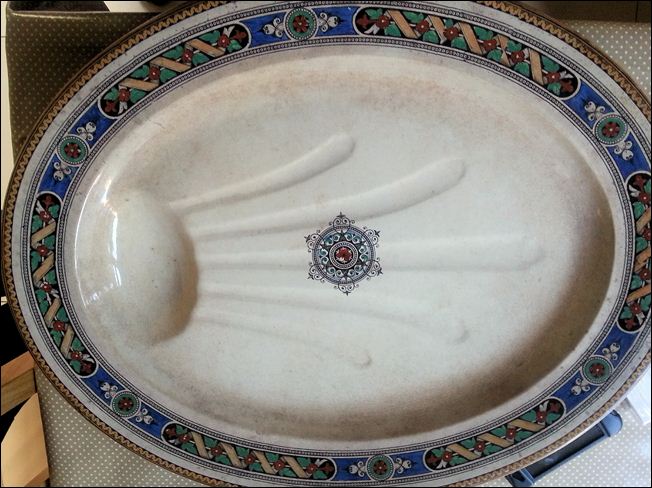
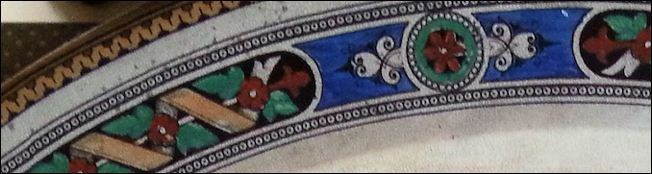
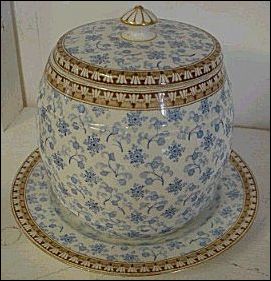
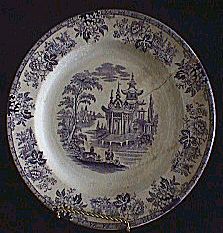
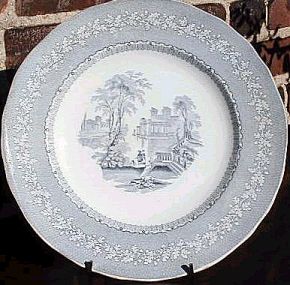
Many of the printed patterns
are well designed; and in the better classes of goods, the enamelling and
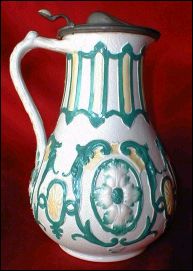
gilding are very effective. The shapes shown below were registered in June
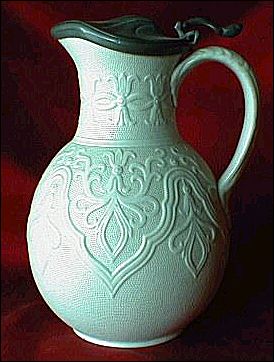
1860. The printed design is coloured-over by hand. The stoneware and Parian
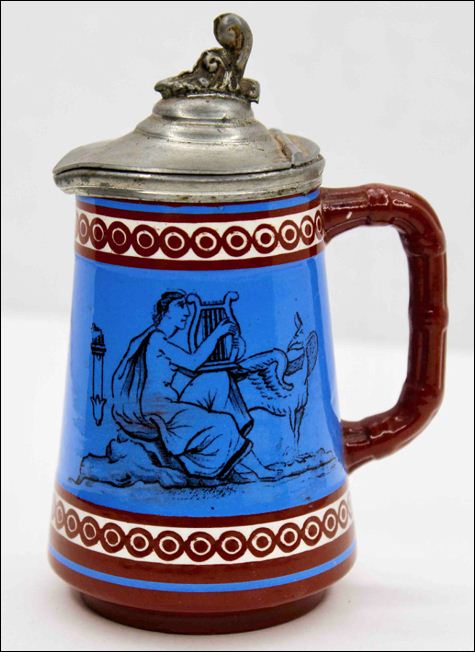
jugs produced were a speciality of this firm. The typical jug form shown
was registered in January 1862. Tea services, tea-kettles, tea-pots, flower-
pots, vases, jardinières, trinket services and other goods were also produced
in earthenware, in every style of decoration.
In 1871, the manufacture of china was added to that of earthenware, new
buildings being specially erected for the purpose; and the productions in this
department made rapid strides towards perfection. In china were produced dinner,
tea, breakfast, dessert and other services, jugs, and a variety of useful
articles, as well as vases and other fancy goods.
Messrs. Brownfield & Sons in this branch produced some novel and very
effective designs in dessert-services, centre-pieces, fern and flower-stands,
etc. Notable among these is a pair of magnificent vases, exquisitely painted
with Etty-like subjects of 'Morning' and 'Midday'. Among the minor pieces was an
oviform vase representing the hatching of an egg: the body of the vase is true
to nature in colour – that of a sea-bird's egg. Services with centre pieces
were also made. These were produced in the very finest porcelain, and the
figures – representing the seasons with their attributes – were modelled by
Hughes Protat. Majolica was another of the specialities of Brownfield's
manufacture; this had a good body, a firm glaze and brilliant colours. In this
material, the firm manufactured all the usual ornamental and useful articles
known to the trade. In Parian, too, a large percentage of figures, groups,
busts, vases, and alt the usual – and many unusual – elegancies of home life
were made. The body is of good quality.
The firm enjoyed a large home
trade, as well as an export one to Denmark, France, Germany, Holland,
Russia, Italy, Spain, Portugal and the United States. The manufactory was
very extensive, upwards of six hundred persons being employed in the
1880s.
In 1893 or 1894, the
Brownfield's Guild Pottery Society Ltd. was formed. It continued until 1900,
when the old works were demolished. Messrs. Myott rebuilt on the site in
1901.
Source: Jewitt's Ceramic Art of Great Britain
1800-1900
|


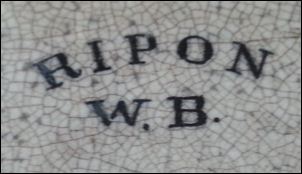
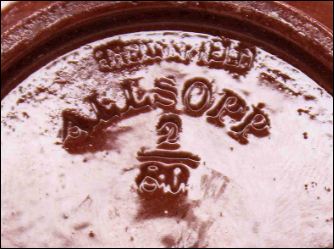
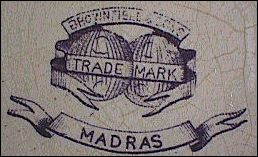
 Marks on William Brownfield Ware