Pottery Index
index of potters initials

list of Stoke-on-Trent potters

potters backstamps

|
Pottery Index |
index of potters initials |
list of Stoke-on-Trent potters |
potters backstamps |
|
English Pottery Marks – A General Guide to Identification and Dating
|
Pottery and porcelain marks—usually found on the underside of a piece—are one of the most important tools for identifying and dating ceramics.
This page outlines the main types of marks found on British ceramics and explains how they can be used to identify the maker and estimate the date. While these guidelines are generally reliable, not all
markings follow consistent rules, and exceptions do occur. Much of this guidance is based on practices used in the North Staffordshire
potteries of Stoke-on-Trent — the historic centre of the British ceramic industry. |
|
|
| Section | Relevance in identifying and dating English pottery |
| Maker's name |
The easiest way to identify pottery manufacturers is from their name, initials or trade name. What if there isn't a name? - The absence of makers’ names or pattern names on early English pottery reflects how the industry operated in the 18th and early 19th centuries. |
| Pattern names |
Pattern names Why is there often no pattern name? |
| Pattern books |
A factory pattern book was the pottery manufacturer’s internal design reference, linking each pattern—usually by number rather than name—to a visual example and practical instructions. Archive resources |
| British Royal Coat of Arms |
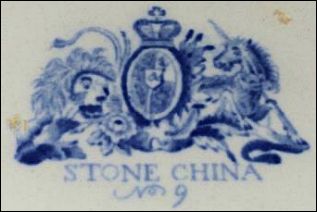
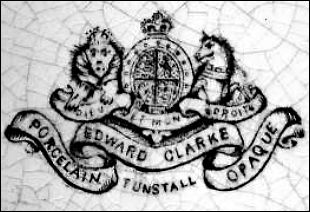
Usually used 'unofficially' Used for prestige, marketing, 'Britishness' Two styles: 1801-1836 and 1837 onwards |
| Design registration marks |
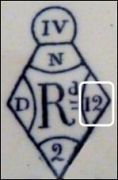
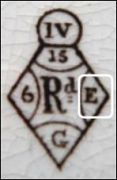
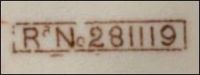
Registration was established under the Designs Registration Act of 1839. Two marking systems: Diamond marks - 1843 to 1882, numerical system - 1884 onwards |
| Limited Liability Company |
Ltd. always dates from after 1861 - in fact there was only one Limited company in the 1860's. It was not until the 1890s when there was a rapid growth in conversion to Ltd., |
| Trade Marks |
Pottery trade marks developed gradually as the British ceramic industry expanded. A major change came with the introduction of formal legal protection under the Trade Marks Registration Act 1875. |
| ENGLAND |
ENGLAND was added to comply with the U.S. McKinley Tariff Act of 1890. With very few exceptions 'ENGLAND' was not used until 1891. |
| MADE IN ENGLAND |
The shift to “Made in England” came from tighter U.S. marking rules rather than simple fashion. Generally introduced in 1914 |
|
|
|
The easiest way to identify pottery manufacturers is from their name, initials or trade name »
What
if there isn't a name?
|
examples
of the development of naming from the mid 18th century
onwards...
| General period | Wedgwood (est. c.1759) |
Spode (est. c.1784) |
Minton (est. 1793) |
| c. 1750-1800 | Irregular "WEDGWOOD' or none | early ware generally unmarked or "SPODE" only - often impressed or a written name and pattern number | early ware generally unmarked or pattern number only. |
| c. 1800-1840 | More consistent name marks | Name &
occasional pattern number. Printed marks "SPODE" + reference to the body e.g. "Stone China" "New Fayence" |
Printed mark with initials of the various partnerships - 'M', 'M&B', 'M&Co'... |
| c. 1840-1900+ | Name + date codes + ENGLAND | Full printed backstamps | Name 'MINTON', developing into Crown/Globe mark + registry + pattern + date codes |

|
|
|
|
|
|
|
|
|
|
|
explore the use of the Royal Arms »
|
|
|
|
|
|
Examples
of the date of incorporation of some pottery manufacturers:
|
|
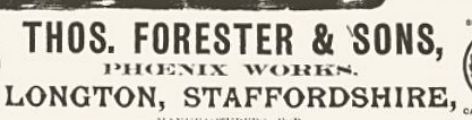
January 1885 advert |
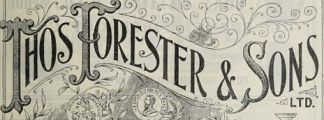
January 1913 advert |
Thomas Forester & Sons
(founded in 1877) became a Limited Liability company in 1891
as reflected in these advertisements
|
|
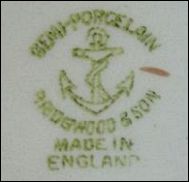
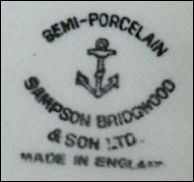 Bridgwood & Son Ltd |
Bridgwood & Son
(founded around 1820) didn't become became a Limited Liability company in 1932
|
|
|
|
Examples
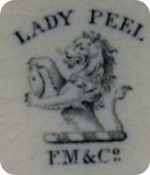
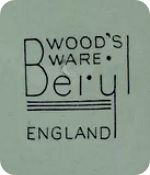
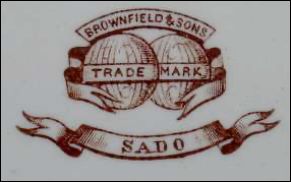
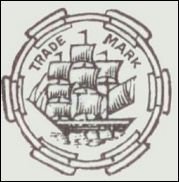
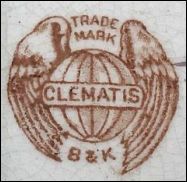
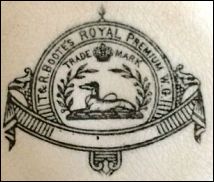
of pottery manufacturers trade marks...
|
|
|
|
|
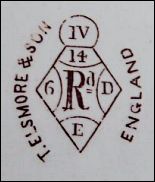
Example of the use of "ENGLAND" prior to 1891: |
|
The registration diamond shows that the pattern was registered on the 14th May 1878 |
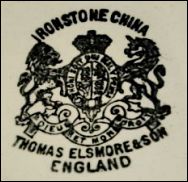 Thomas Elsmore & Son ENGLAND |
|
Thomas Elsmore & Son were in business from 1872 to 1887 - during which period there was no requirement to mark ware exported to the U.S. with the country of origin. Unusually for the time the overwhelming majority of their marks included "ENGLAND" - probably as a marketing tool as much or all of their ware was exported to North America. |
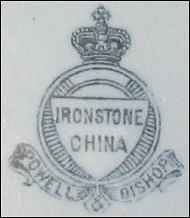 Ironstone China Powell & Bishop |
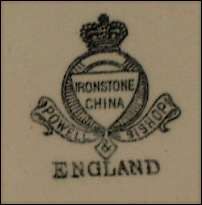 Ironstone China Powell & Bishop England |
|
Powell & Bishop operated from 1867 to 1878 - more than 13 years before the addition of "ENGLAND" became mandatory for export to the US in 1891 |
|
|
|
|
|
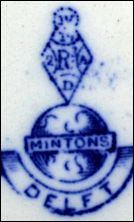
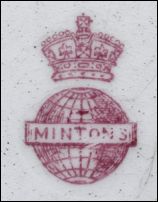
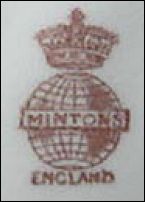
Example of one company's transition from pre-1891 marks, through the use of England and then to Made in England: |
|
1871+ |
c.1873-1890 |
1891-c.1912 |
c.1912-1950 |
1950 |
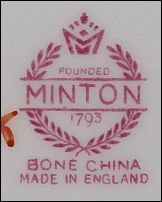
| the registration diamond shows that the pattern was first registered on the 14th September 1871 | typical Minton globe and crown mark | continuation of the globe and crown mark with the addition of 'ENGLAND' | the globe and crown mark with laurel leaves, 'EST1793' and 'MADE IN ENGLAND' |
|
|
|
|