|
|
Churches and Chapels of Stoke-on-Trent St. Peter Ad Vincula - Stoke |
|
|
|
|
|
Churches and Chapels of Stoke-on-Trent St. Peter Ad Vincula - Stoke |
|
|
| Index of Churches and Chapels | Index of Stoke Churches |
|
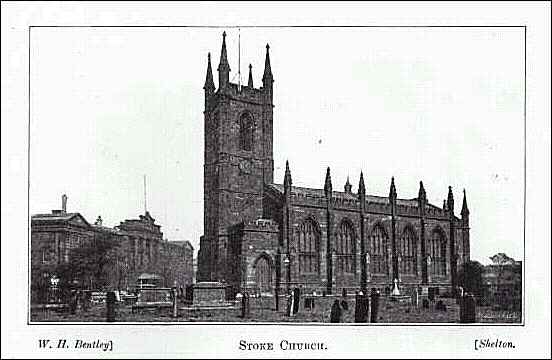
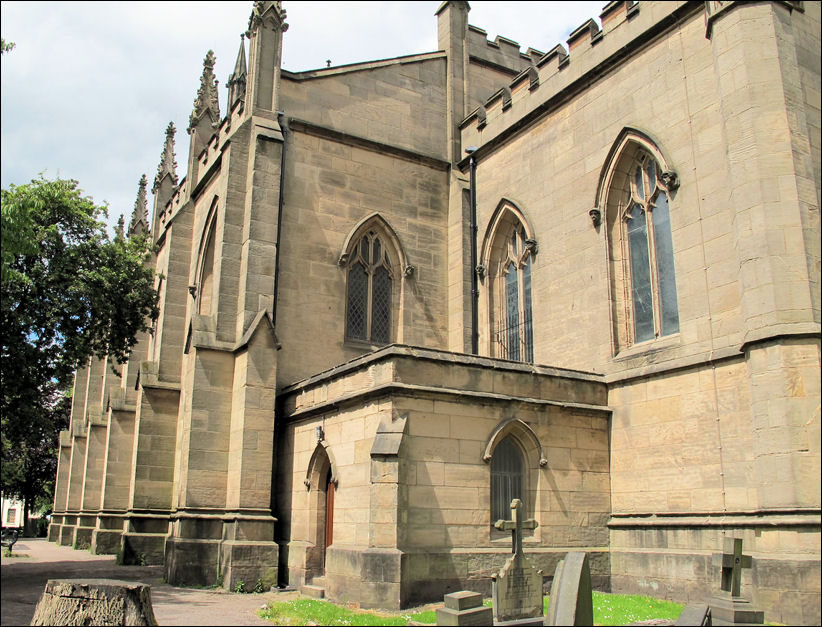
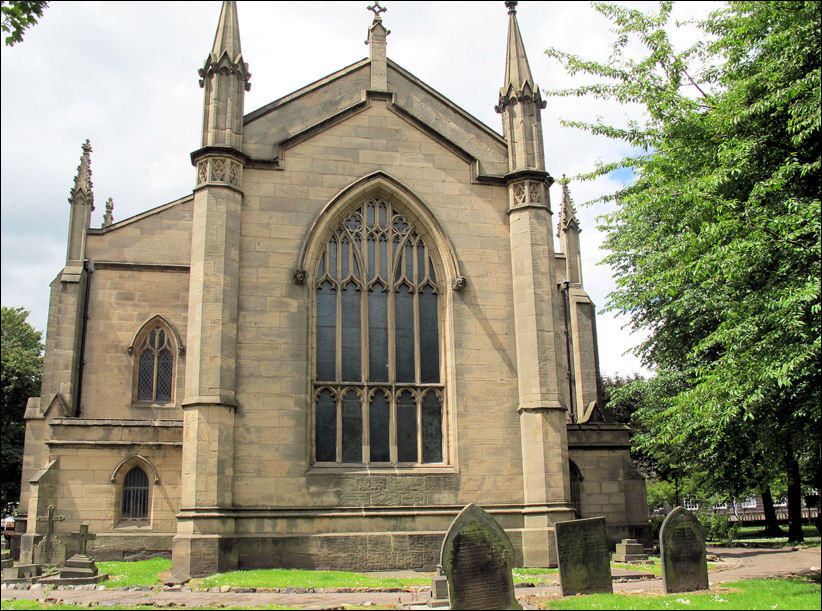
Minster Church of St. Peter Ad Vincula (St. Peter in Chains). Built by 1826-1830 by Trubshaw and Johnson and renovated inside in 1888. |
|
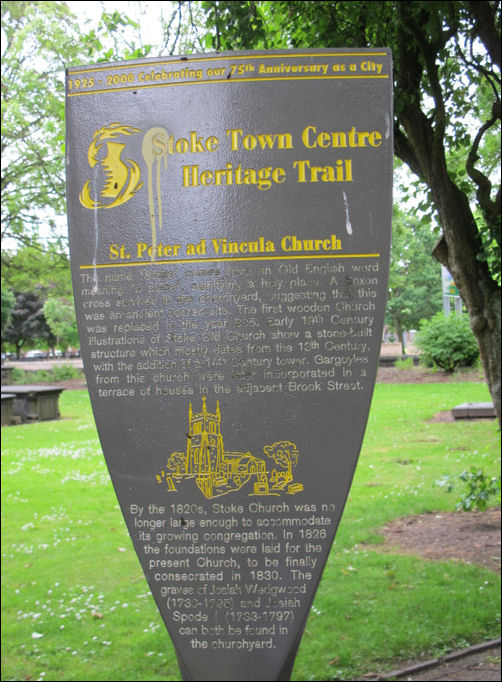
Stoke Town Centre Heritage Trail St. Peter ad Vincula Church
The name "Stoke" comes from an Old English word meaning "a place", signifying a holy place. A Saxon cross survives in the churchyard, suggesting that this was an ancient sacred site. The first wooden Church was replaced in the year 805. Early 19th Century illustrations of Stoke Old Church show a stone-built structure which mostly dates from the 13th Century, with the addition of a 14th Century tower. Gargpyles from this church were later incorporated in a terrace of houses in the adjacent Brook Street. By the 1820's Stoke Church was no longer large enough to accommodate its growing congregation. In 1826 the foundations were laid for the present Church, to be finally consecrated in 1830. The graves of Josiah Wedgwood (1730-1795) and Josiah Spode I (1733-1797) can both be found in the churchyard. |
|
from an 1893 journal on The Potteries: "Parish establishment of St. Peter: First among the public buildings, which will attract the attention of the visitor are the churches, at the head of which stands the parish establishment of St. Peter. The old parish church of Stoke was situated in the immediate vicinity of Rykenield Street; and the present church, which was rebuilt in 1826-29, stands on glebe land, formerly attached to the old churchyard. It is a very handsome structure in stone, in the Early English style, built from designs by Messrs. Trubshaw and Johnson, of Haywood. It consists of chancel with vestries, rectangular nave, with quasi aisles, and an embattled western tower of four stages, with crocheted pinnacles, and containing a fine peal of eight bells. There are porches on either side of the tower and the interior is surrounded on three sides by galleries. The east window and four others in the chancel are beautifully stained.
In the churchyard are two stones which bear ample testimony to the salubrity of the neighbourhood. They are to the memory of Sibil Clarke, d. 1684, aged 112 years, and Henry Clark, also 112 years old. The registers of the church date back to 1630. Stoke enjoy the honour of having given its first suffragan-bishop to Shrewsbury, the right Rev. Sir Lovelace Tomlinson Stamer, Bart., D.D., of Trinity College, Cambridge, having been rector of Stoke since 1858. There are also in the neighbourhood other handsome churches, which have been made heads of ecclesiastical parishes by the Ecclesiastical Commissioners."
|
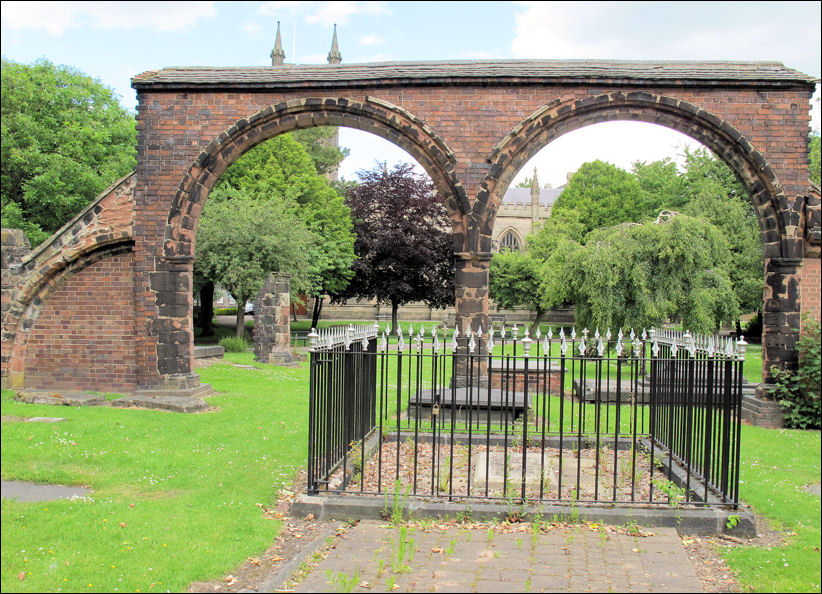
Ruins of earlier church
(Arches) in the grounds of St. Peter Ad Vincula
in the foreground is the grave of
Josiah Wedgwood
|
St Peter ad Vincula, Stoke - a Minster Church St Peter ad Vincula, Stoke, was
confirmed as a Minster Church. In a public ceremony on Tuesday 17th
May at 7:30pm the Rt Revd Jonathan Gledhill conferedthe title of
"Stoke Minster" on the church. |
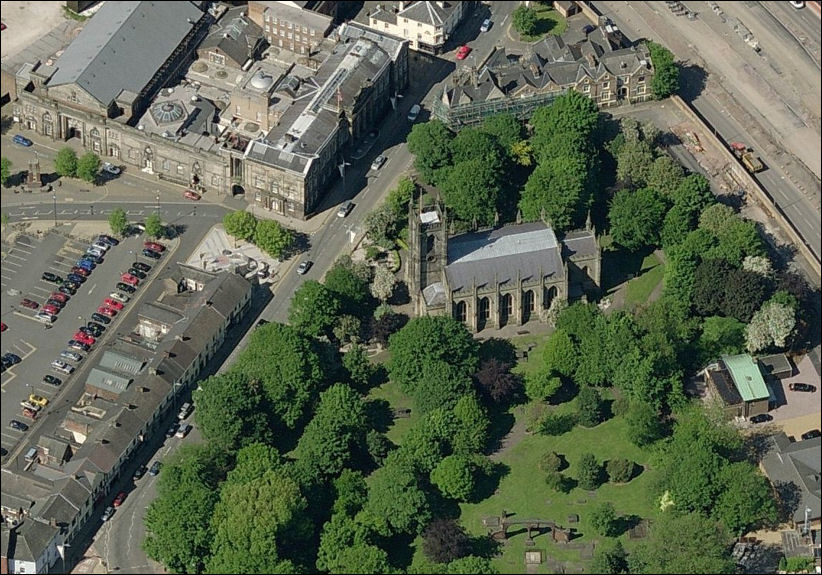
The church and grounds of St. Peter ad Vincula
to the left is Glebe Street and
to the right is the A500 dual carriageway
In the top left corner is Stoke Town Hall and the Kings Hall
above the church is Brook Street
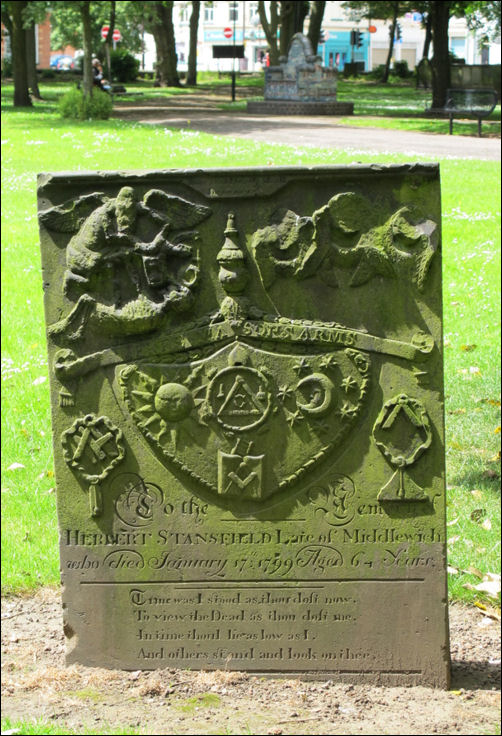
In the church grounds stands
the headstone
of
Herbert Stansfield showing Masonic Symbols
To the Memory of
HERBERT STANDSFIELD Late of Middlewich
who died January 17th 1799 Aged 64 Years
"Time was I stood as thou
doth now
To view the Dead as thou doth me
In time thoul lie as low as I
And others stand and look on thee"
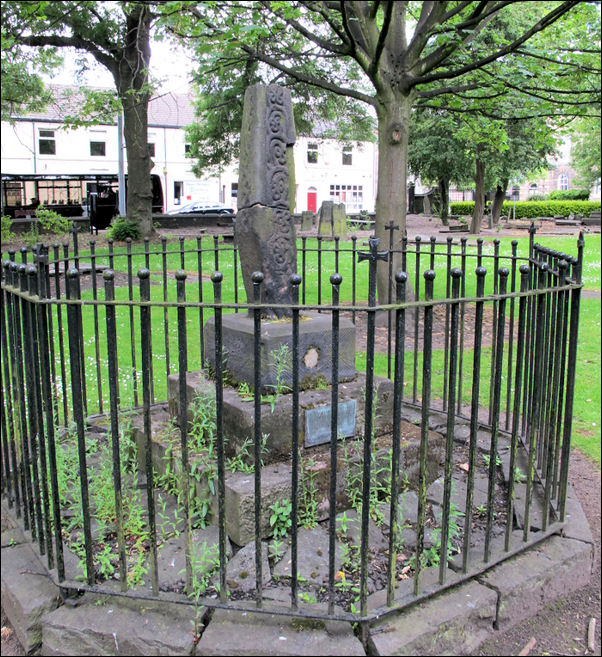
Fragment of a pre-Norman
cross in the grounds of the church
The fragments from the medieval (pre-Norman (1066) preaching cross
were identified by the local architect Charles
Lyman
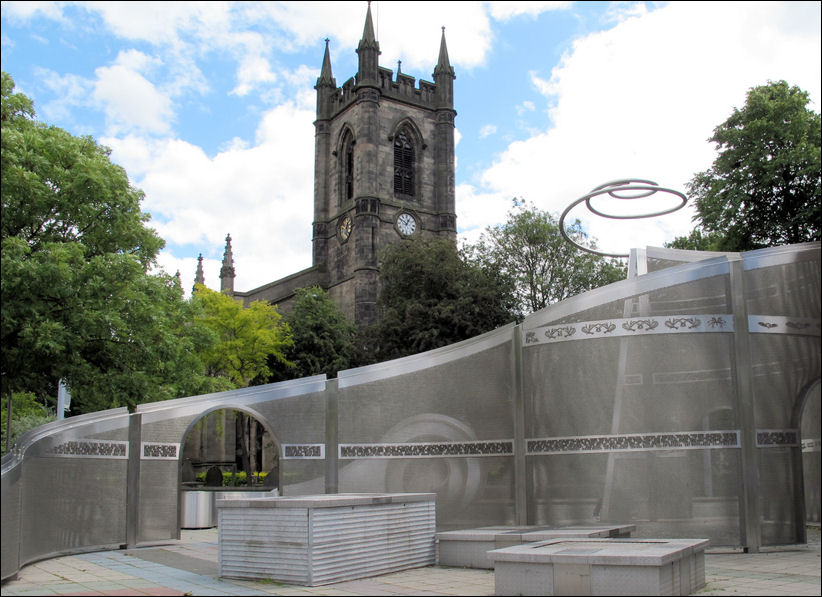
The view of St. Peters
through the sculpture 'Another Gift' on the corner of Kingsway and Glebe
Street
the stainless steel sculpture was
installed in 2005
related pages
Listed building details for St. Peters
Photos of listed buildings in and around St. Peter's grounds
Glebe Street (where St. Peter's stands)
Fragment of a pre-Norman cross in the grounds of the church
Headstone of Herbert Stansfield
Ruins of earlier church (Arches)
also see..
Christian Heritage of Stoke-on-Trent