|
The
Story of J. & G. Meakin - 1851-1951
|
    |
| Index Map of the City |
1851
& all that James the Elder |
James
Meakin George Meakin |
Post
WWI George Elliot Meakin |
Reconstruction Neotechnic Works |
Between
the Wars Agents |
|
|
|
NEW MARKETS FOR OLD
Between 1890 and the end of the First World War the pottery industry suffered severely from cyclic fluctuations in trade. This was a period of intense competition between potter and potter, nation and nation. Years of boom, full employment and profit were followed by years of depression, cut-throat prices and loss: the pottery industry moved by fits and starts and many businesses failed to stay the course. The worst sufferers were, as always, those firms that devoted most of their energy to the export trade, for in a slump the overseas markets are the first to shut their doors and cancel orders. Pre-eminent among exporting pottery businesses, the firm of J. and G. Meakin could not avoid many hard knocks during these years, but it was always strong and resilient enough to weather its crises. When old markets were temporarily lost, new ones were speedily cultivated by energetic directors and representatives who travelled the world with their samples. George Meakin's example has been followed throughout the firm's history: the journeys undertaken by the present directors and staff are no longer pioneering missions—"Sol" brand pottery is already world famous—but the firm's policy of fostering trade connections by personal contact between Hanley and its merchant customers overseas remains unaltered. |
|
|
|
GEORGE ELLIOT MEAKIN
Throughout these difficult years the firm's progress was guided by the wise hand of George Elliot Meakin. He was born in 1864, at Northwood House, Hanley, was educated at Rugby and studied for a career in the army; but at the age of nineteen he changed his mind and returned to the Potteries to join the family business. Under his father (George) and his uncle James he began a long apprenticeship at the Eagle Pottery. From this he emerged a sound and practical potter and was taken into partnership. On his father's death in 1891, he succeeded to the chairmanship of the business which had in the previous year been converted into a limited liability company under the name of J. and G. Meakin Ltd., and in this capacity he served the firm faithfully and well for thirty-six years. For some years he was assisted in the management of the business by his brother James and cousin Kenneth, and subsequently by Bernard Meakin and H. Leonard Jones.George Elliot Meakin joined the business at a time when the export markets were developing new tastes in pottery shapes and decorations. In addition to White Granite with its simple embossment and graceful, utilitarian shapes, they became interested in pattern and colour. Accordingly J. and G. Meakin set to work to produce a semi-porcelain body which would provide an appropriate setting for their prints.
The Staffordshire Sentinel said of George Elliot Meakin,
In 1918 he had the distinction of being appointed High Sheriff of Staffordshire, and for many years he was an Alderman of the City of Stoke-on-Trent. |
|
|
|
THE CHAIRMAN
Two sons of "G" were in turn succeeded by two sons of "J". The elder, Kenneth, who joined the firm in 1899 and did much valuable work until the First World War started, unfortunately was killed in action with the Fifth North Staffords in May, 1915, to the great loss of the firm. The younger, Bernard Meakin, joined the firm in 1908 and soon made his mark as a skilled administrator. To the people of North Staffordshire his name is closely associated with cricket, for in his day he was an attractive and highly successful batsman and a captain of uncommon skill and resource. Bernard Meakin has had a long innings both with his firm, of which he has been Chairman since 1927, and with the County Club of which he is now president. And just as he was fortunate on the field to captain a team "of all the talents", so he now commands a board of directors whose several abilities ensure the maintenance of the Meakin tradition.
|
|
|
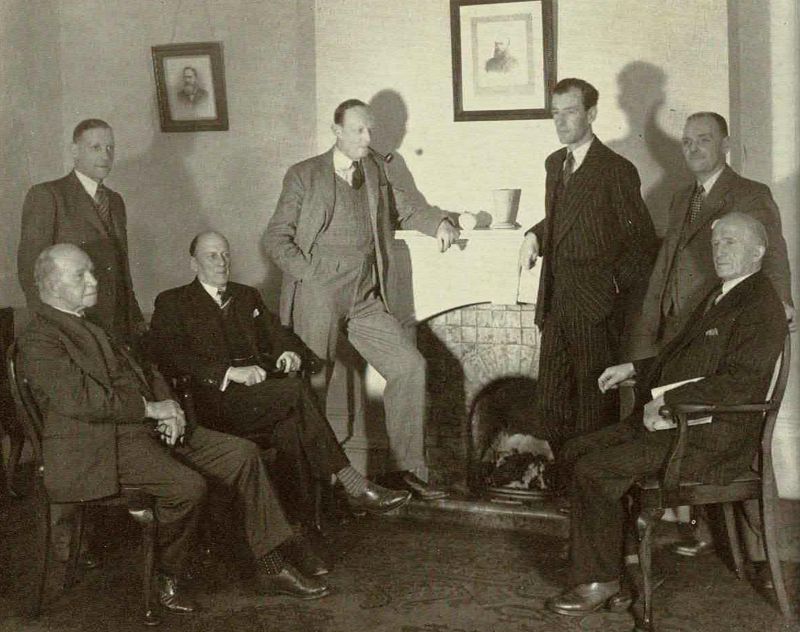
The Directors
seated left to right: H. Leonard Jones, Bernard Meakin (Chairman), Percy E. Jones,
standing left to right: Frank Pedley (Secretary), James F. Meakin, Rodney Meakin, T. H. Breeze.
|
|
No one has ever had the interests of the firm more at heart than H. Leonard Jones, the Vice-Chairman, who
has given to it a "lifetime" of over 60 years' service. He is known and respected by clients in all parts of the world, and has won the warm regard alike of employees and of his
contemporaries.
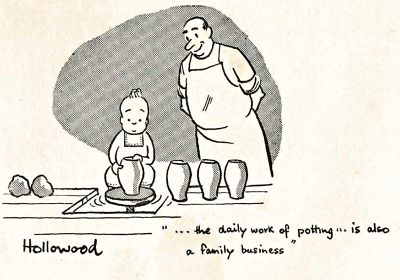
In this short chronicle mention has been been made of only the principals of the firm, but there have been others—managers, travellers, designers, modellers and operatives—who have made notable contributions to its success. It is not possible, however, to compile a complete list of their names and to do less would be invidious. No firm in the pottery industry has had the services of more loyal and competent employees than the thousands who have potted over the past hundred years for J. and G. Meakin. If the firm is a "family affair", then it can, with equal justice, be claimed that the daily work of potting— jolleying, dipping, placing, decorating and so on—is also a family business, for the present operatives at the Eagle and Eastwood works are in many instances the sons and daughters, grandsons and granddaughters of those who potted with "J" and "G". |
|
|
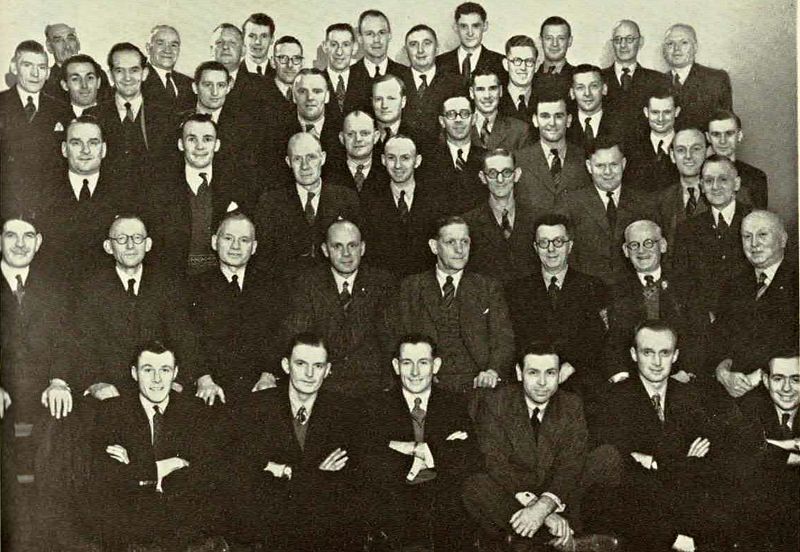
The Commercial and Managerial
staff of J. & G. Meakin Lid
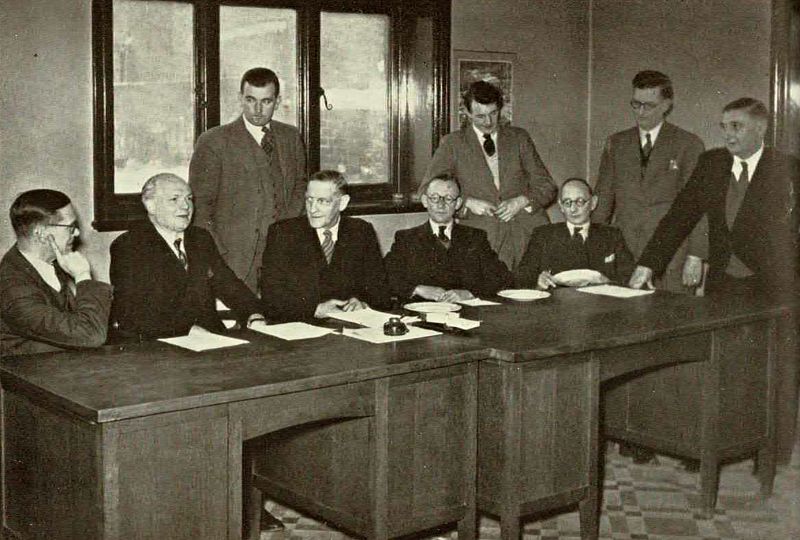
The sales staff in conference
Seated left to right: G. A. WOODHOUSE, W. T. MOLLART, F. PEDLEY, E. SAMBROOK, C. AINSWORTH
Standing left to right: C. BROOKES, A. D. JONES, E. J. SAMBROOK, A. SNAPE
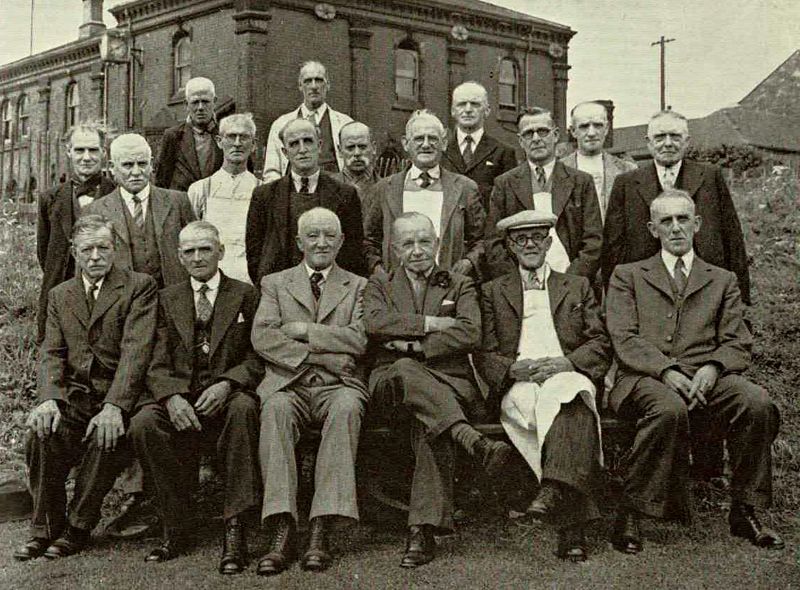
50 years or more with J. & G. Meakin
(a total of 947 years)
Seated left to right: WILL PARSONS, TOM SHEMILT, FRED PARSONS, H. LEONARD JONES, HARRY ALCOCK, J. G. SLATER
Middle row: JACK BRUNT, FRED DUTTON, ARTHUR DEAVILLE, GEORGE CORNES, JOE ROBINSON, ALBERT SMITH, ALF FENTON, WILLIAM RADFORD
Back row: GEORGE NIGHTINGALE, RANDOLPH STANLEY, JACK WRIGHT, SAM STEELE
|
|
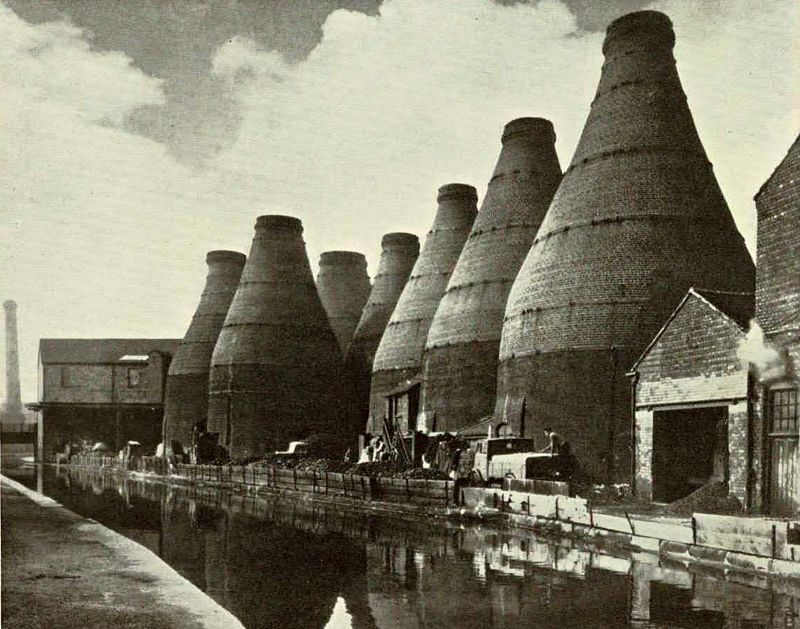
Eastwood pottery from the canal
("The Seven Sisters")
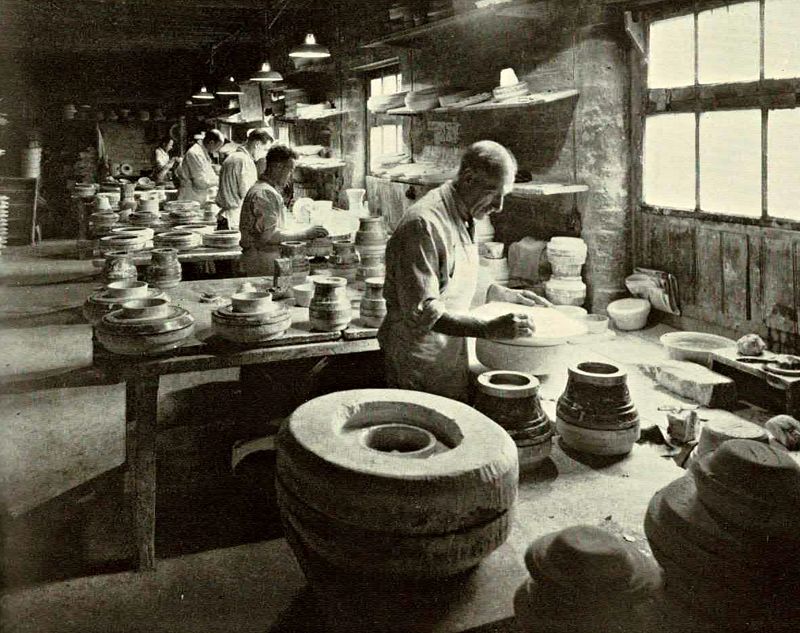
Mould Making
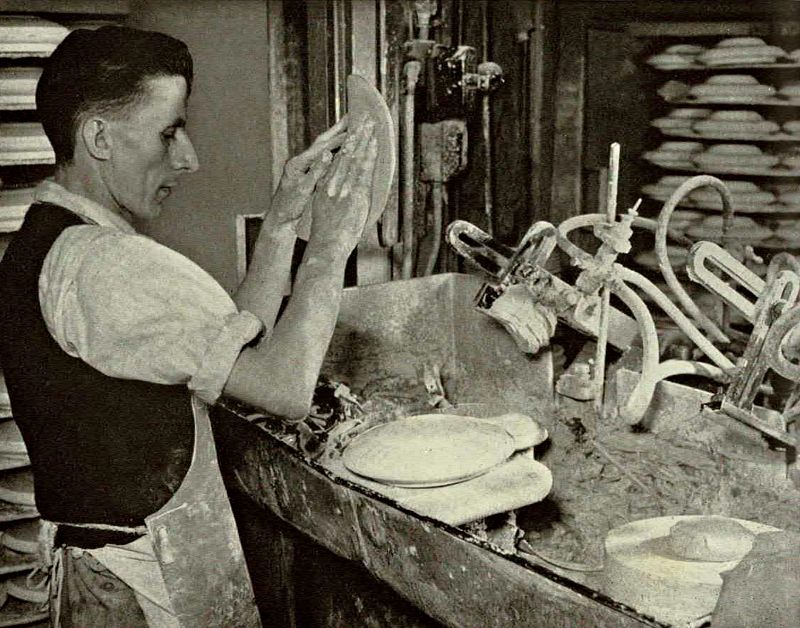
Plate making, semi-automatic
|
|
|
This section created 2 May 2026 |